Mecklenburg County - Housing & Homelessness Dashboard
  • Data
    • Housing Data Snapshot
    • Coordinated Entry Data
      • Coordinated Entry Data: Homeless
      • Coordinated Entry Data: Prevention
    • System Performance Measures
  • Blog
  • CoC
  • Research
    • State of Housing Instability & Homelessness Reports
    • Spotlight Reports
  • HMIS
  • Point-in-Time Count
    • Support
    • Raise Awareness
    • Volunteer
  • GET HELP
  • Search
  • Menu

Street Outreach

Roof Above

Supportive Housing Communities

Emergency Shelter

HomeCare for the Carolinas

The Relatives

Roof Above

Safe Alliance

Samaritan House

Salvation Army Center of Hope

Sunshine Village

Transitional Housing

Charlotte Family Housing

Family Forum, Inc.

Florence Crittenton

Friendship Missionary

Hope House Foundation

Lily Pad Haven

Mecklenburg County

Roof Above

Safe Alliance

Salvation Army Center of Hope

YWCA: Families

Rapid Re-housing

Asheville Buncombe Community Christian Ministry (ABCCM)

Catholic Charities Diocese of Charlotte

Charlotte Family Housing

Community Link

Heal Charlotte

Mecklenburg County Community Support Services

Roof Above

Salvation Army Center of Hope

Supportive Housing Communities

The Relatives

Other Permanent Housing

Charlotte Family Housing

Roof Above

Salvation Army Center of Hope

Veteran’s Administration

Permanent Supportive Housing

Carolinas CARE Partnership

Mecklenburg County Community Support Services

Roof Above

Supportive Housing Communities

Youth action Board

Menu
  • Who We Are
  • What We Do
  • How We Work
  • Get Involved
  • CoC Documents
  • CoC Notice of Funding Opportunity (NOFO)

COVID19 Update

In response to the global pandemic caused by COVID-19, the Charlotte-Mecklenburg Continuum of Care formed a taskforce to address the recommendations outlined in the Home4Good Framework. Click the link to read more about the framework. Additional information related to the impact of COVID-19 on housing instability and homelessness can be found on the Charlotte-Mecklenburg COVID-19 Housing Hub, via this link.

Read COVID-19 Framework

Continuum of Care Responsibilities & Activities

The Continuum of Care (CoC) Program, which is authorized by the U.S. Department of Housing and Urban Development (HUD), is designed to promote a communitywide commitment to the goal of ending homelessness; provide funding for efforts by nonprofit providers, and State and local governments to quickly rehouse homeless individuals and families while minimizing the trauma and dislocation caused to homeless individuals, families, and communities by homelessness; promote access to and effect utilization of mainstream programs by homeless individuals and families; and optimize self-sufficiency among individuals and families experiencing homelessness.

Some of the CoC activities are highlighted on this page. To read the full list of mandated activities, click below to expand the box.

Click to read the full list of CoC responsibilities and activities mandated by the CoC Program Interim Rule.

  • Hold meetings of the full membership at least semi-annually; making an invitation for new members to join the CoC at least annually.
  • Adopt and follow a written process to select a board to act on behalf of the Continuum of Care.
  • Appoint additional committees, sub-committees, or workgroups to carryout the work of the CoC.
  • In consultation with the Collaborative Applicant and the HMIS Lead, develop, follow, and update annually a governance charter.
  • Consult with recipients and sub-recipients to establish performance targets appropriate for population and program type, monitor recipient and sub-recipient performance, evaluate outcomes, and take action against poor performers.
  • Evaluate outcomes of projects funded under the Emergency Solutions Grants (ESG) program and the CoC program, and report to HUD.
  • Establish and operate either a centralized or coordinated assessment system that provides an initial, comprehensive assessment of the needs of individuals and families for housing and services.
  • Establish and consistently follow written standards for providing Continuum of Care assistance.
  • Designate a single Homeless Management Information System (HMIS) for the geographic area, including designating an eligible applicant to manage the Continuum’s HMIS, which will be known as the HMIS Lead; review, revise, and approve a privacy plan, security plan, and data quality plan for the HMIS; ensure consistent participation of recipients and sub-recipients in the HMIS; and ensure the HMIS is administered in compliance with requirements prescribed by HUD.
  • Develop a plan that includes: coordinating the implementation of a housing and service system within its geographic area that meets the needs of the homeless individuals (including unaccompanied youth) and families; and includes at a minimum, outreach, engagement, and assessment; shelter, housing, and supportive services; and prevention strategies.
  • Plan for and conduct, at least biennially, a point-in-time count of homeless persons within the geographic area.
  • Conduct an annual gaps analysis of the homeless needs and services available within the geographic area.
  • Provide information required to complete the Consolidated Plan(s) within the Continuum’s geographic area.
  • Consult with State and local government Emergency Solutions Grants program recipients within the Continuum’s geographic area on the plan for allocating Emergency Solutions Grants program funds and reporting on and evaluating the performance of Emergency Solutions Grants program recipients and sub-recipients.
  • Develop a VAWA emergency transfer plan.

Coordinated Entry

Coordinated Entry is Charlotte-Mecklenburg’s system portal that connects those who are experiencing homelessness or housing instability to an available shelter or other housing resource. Coordinated Entry also helps the community to both prioritize resources for the most vulnerable households and to identify gaps and shortages in housing resources. By participating in Coordinated Entry, housing organizations prioritize their temporary and permanent housing assistance for households seeking assistance through the Coordinated Entry “front door.”

Click here to learn more about Coordinated Entry in Charlotte-Mecklenburg.

For any feedback regarding Coordinated Entry please email Megan.Coffey@MeckNC.gov

Homeless Management Information System

A Homeless Management Information System (HMIS) is a local information technology system used to collect client-level data and data on the provision of housing and services to homeless individuals and families and persons at risk of homelessness. Each Continuum of Care (CoC) is responsible for selecting an HMIS software solution that complies with HUD’s data collection, management, and reporting standards.

Click here to access the HMIS resource page for Charlotte-Mecklenburg.

Point-in-Time Count

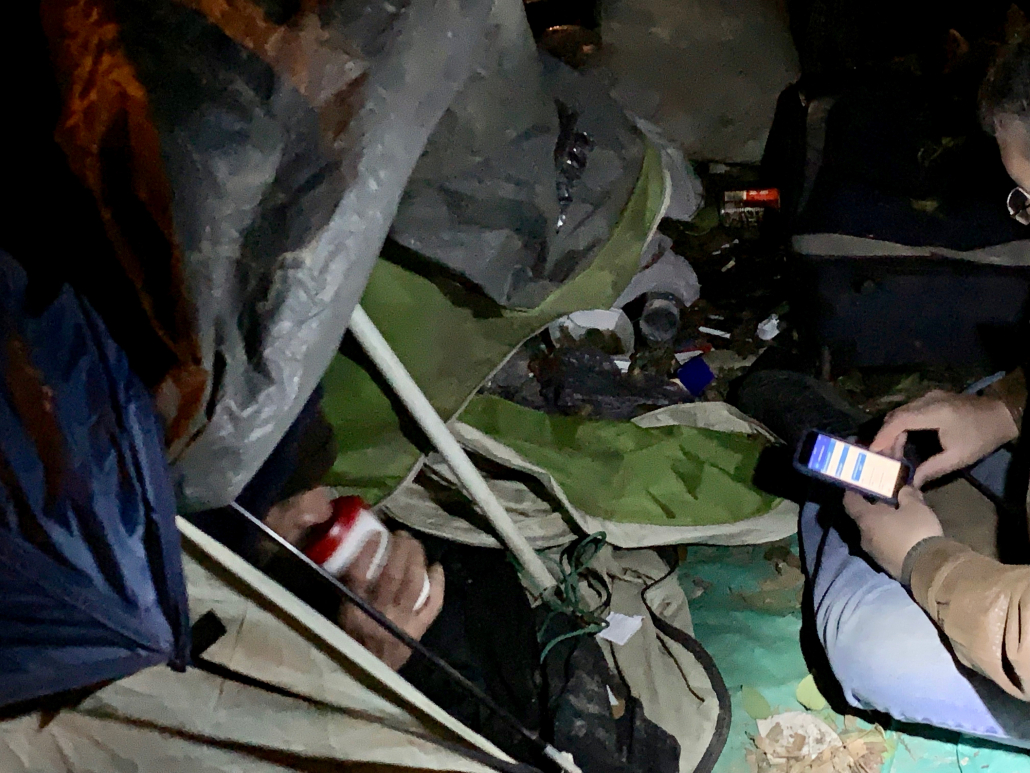
The Point-in-Time Count is when our community comes together to survey each person experiencing sheltered or unsheltered homelessness on one night. It is also when we capture temporary and permanent housing capacity and inventory across the housing continuum. The Point-in-Time Count and Housing Inventory Count are required activities for the Continuum of Care (CoC) to receive federal homelessness funding assistance from the U.S. Department of Housing & Urban Development (HUD). Charlotte-Mecklenburg also goes above and beyond to collect additional information that can inform local decision-making. The data from the 2020 Point-in-Time Count will be released with the State of Housing Instability & Homelessness Report in September 2020.

To see the survey results from the 2019 Point-in-Time Count, please click here. To learn more about the Point-in-Time Count, visit the EveryBodyCountsCLT page via this link.
Funding

The CoC is responsible for designing, operating, and following a collaborative process for the development of applications and approval the submission of applications in response to an annual Notice of Funding Availability (NOFA) published by the U.S. Department of Housing and Urban Development (HUD). This includes establishing priorities for funding projects in the geographic area. Mecklenburg County Community Support Services, which serves as the Collaborative Applicant applies for Continuum of Care planning activities on behalf of the community.

The Charlotte-Mecklenburg Continuum of Care has oversight responsibility for the CoC Program funding and Emergency Solutions Grant funding issued by the North Carolina Department Health & Human Services.

Click here to access more information about the Notice of Funding Opportunity (NOFO).

Collaborative Applicant

The Collaborative Applicant (CA) is the organization designated by the CoC to submit the required CoC application for all projects selected for funding; and apply for CoC planning funds. In the Charlotte-Mecklenburg CoC, the CA works closely with the Governing Board; the CoC membership; and CoC committees and workgroups in order to effectively coordinate the housing and services system and to achieve the vision and mission set by the CoC. Mecklenburg County Community Support Services currently serves as the CA for the Charlotte-Mecklenburg CoC.

Recent Posts

  • Reflections on 100 Days of Action
  • Building a Stronger Future for Supportive Housing
  • The Gap 2026: What the National Shortage of Affordable Homes Means for Mecklenburg County
  • 2026 Point-in-Time Count: What the Data Reveal About Homelessness in Charlotte-Mecklenburg
  • One Number Update: March 2026
© Copyright - Mecklenburg County - Housing & Homelessness Dashboard - Enfold Theme by Kriesi
Scroll to top