

Mary Ann Priester, PhD, MSW
Senior Management Analyst
Mecklenburg County Community Support Services
While homelessness is the most visible form of housing crisis, housing instability affects far more households and often represents the earliest stage of housing loss.
This blog is the second in a five-part series examining findings from the 2025 State of Housing Instability and Homelessness (SOHIH) Report. The first blog in this series provided an overview of the housing continuum. This post takes a deeper look at housing instability in Charlotte-Mecklenburg, including housing cost burden, affordable housing supply, and eviction filings, and examines how these factors contribute to housing loss and increased risk of homelessness.
HOUSING INSTABILITY
Housing instability refers to conditions in which households are at risk of losing housing or are unable to maintain safe, affordable, and sustainable housing over time. Housing instability can include difficulty affording rent, facing eviction, frequent moves, overcrowded living conditions, or relying on temporary or informal housing arrangements. While homelessness represents the most severe form of housing instability, many more households experience earlier stages of instability that increase their risk of future housing loss. Understanding housing instability is critical because it reflects both current housing challenges and the risk of future homelessness.
HALF OF ALL RENTERS ARE COST-BURDENED
Housing instability exists along a continuum and includes households struggling to afford rent, living in overcrowded or substandard housing, or facing eviction. The most widely used indicator of housing instability is housing cost burden, defined as spending more than 30% of household income on housing. Households spending more than half their income on housing are considered severely cost-burdened and face the greatest risk of housing loss.
In 2024, approximately 108,578 renter households in Mecklenburg County were cost-burdened, representing 50% of all renter households. Nearly one-quarter were severely cost-burdened, meaning they spent at least half their income on housing. These households have very limited ability to absorb unexpected expenses, making them highly vulnerable to eviction and housing loss.
Housing cost burden reflects the growing gap between housing costs and household incomes. Over the past decade, housing costs have increased significantly while incomes have not kept pace for many households. As a result, more households are forced to allocate a larger share of their income toward housing, leaving fewer resources available for other basic needs such as food, healthcare, and transportation.

HOUSING INSTABILITY INCREASINGLY AFFECTS MODERATE-INCOME HOUSEHOLDS
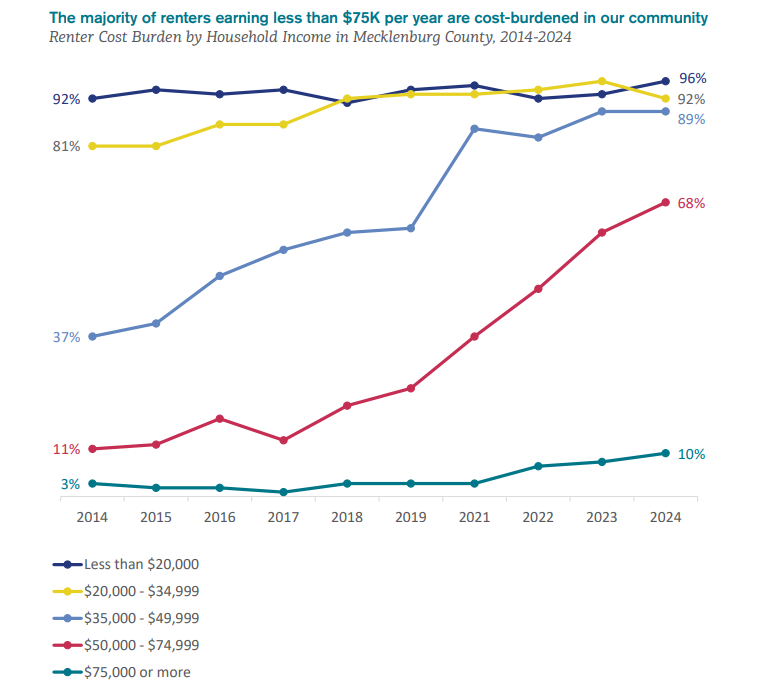
Housing instability is most acute among households with the lowest incomes. In 2024, 96% of renter households earning less than $20,000 per year were cost-burdened, reflecting the severe affordability challenges faced by extremely low-income households. However, housing instability is increasingly affecting households at higher income levels as well. Cost burden increased significantly among renter households earning between $50,000 and $74,999. This trend indicates that housing affordability challenges are expanding beyond traditionally vulnerable populations and affecting a broader range of households.
As housing costs rise, households that were previously able to maintain stability may become increasingly vulnerable to financial shocks, such as medical expenses, job loss, or unexpected repairs. This expansion of housing instability into moderate-income households reflects broader structural pressures within the housing market.
AFFORDABLE HOUSING SUPPLY HAS NOT KEPT PACE WITH NEED
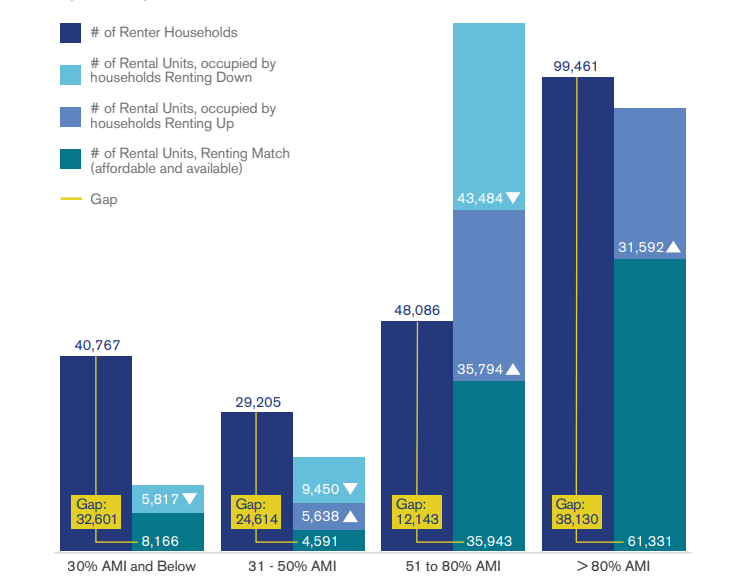
The shortage of deeply affordable housing is a primary driver of housing instability. Households earning at or below 30% of Area Median Income face the greatest challenges securing housing they can afford. In Mecklenburg County, there are approximately three extremely low-income households for every one unit affordable to them. This mismatch between income and housing costs forces many households to rent housing beyond what they can sustainably afford. Over time, this increases the likelihood of eviction, displacement, and housing loss.
At the same time, the supply of naturally occurring affordable housing has declined. Between 2015 and 2024, Mecklenburg County experienced a significant reduction in lower-cost rental units. As older, lower-cost housing is replaced with higher-cost units, fewer affordable options remain available to households with limited incomes. This loss of affordable housing reduces the ability of households to remain stably housed and increases overall housing system pressure.
EVICTION FILINGS REFLECT WIDESPREAD HOUSING INSTABILITY
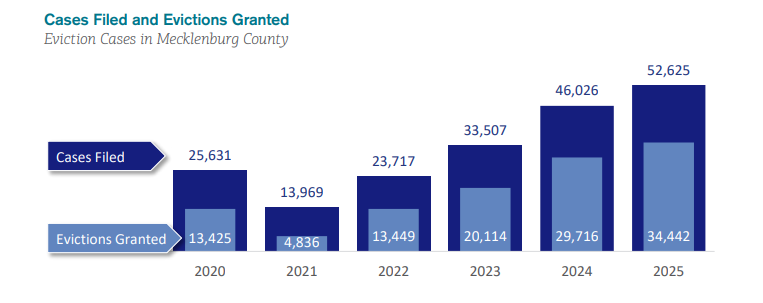
Eviction filings provide another important indicator of housing instability. In fiscal year 2025, more than 52,000 eviction cases were filed in Mecklenburg County, with 66% resulting in eviction orders granted in whole or in part. Eviction filings reflect both immediate housing loss and longer-term housing instability. Even when households are not physically displaced, eviction records can create barriers to securing future housing, making it more difficult for households to regain stability. Evictions also represent a key pathway into homelessness. Households that lose housing due to eviction often enter emergency shelter or rely on informal housing arrangements, increasing housing precarity.
WHY THIS MATTERS
Housing instability is the primary driver of homelessness. Most households experiencing homelessness were previously housed but became destabilized due to rising housing costs, eviction, or loss of income. The data show that housing instability is both widespread and increasing, reflecting structural housing affordability challenges. Without sufficient access to affordable housing and rental assistance, more households are at risk of housing loss. Preventing homelessness requires addressing housing instability upstream. Strategies such as expanding deeply affordable housing, preserving existing affordable housing, and increasing access to rental assistance can help stabilize households and reduce inflow into homelessness. Housing instability also affects broader community outcomes, including workforce stability, educational continuity, and health. Strengthening housing stability improves outcomes not only for individual households but also for the broader community. In Mecklenburg County, approximately 108,578 renter households are cost-burdened, including nearly one-quarter who are severely cost-burdened. At the same time, more than 52,000 eviction filings occur annually. These data illustrate the scale of housing instability and the number of households at risk of housing loss and homelessness.
Stay tuned for future blog posts, which will continue to deep dive each aspect of the housing continuum.
SIGN UP FOR BUILDING BRIDGES BLOG