
Mary Ann Priester, PhD, MSW
Senior Management Analyst
Mecklenburg County Community Support Services
Housing Innovation & Stabilization Services Division
The 2025 State of Housing Instability and Homelessness (SoHIH) report, released today, provides a comprehensive view of housing conditions across the full housing continuum from instability to homelessness to stable housing. Produced annually by Mecklenburg County Community Support Services, the report integrates local, regional, and national data sources to assess housing instability, homelessness, and access to stable housing, offering critical insight into both system performance and structural challenges.
The 2025 report highlights the growing pressures facing households across Mecklenburg County and underscores the structural factors driving housing instability. Taken together, the findings show that housing instability remains widespread, homelessness persists, and deeply affordable housing remains critically insufficient to meet community need. These trends reinforce the importance of coordinated strategies that address both immediate housing crises and the upstream conditions that place households at risk.
This blog post outlines the key findings from the 2025 SoHIH report and examines what these findings could mean for Mecklenburg County.
KEY FINDINGS
The 2025 SoHIH report identifies several key trends that illustrate both the scale of housing instability in Mecklenburg County and the structural factors contributing to it. The following sections highlight the most significant findings and what they reveal about housing affordability, homelessness, and access to stable housing across the community.
HOUSING INSTABILITY IS INCREASING AND AFFECTING MORE HOUSEHOLDS
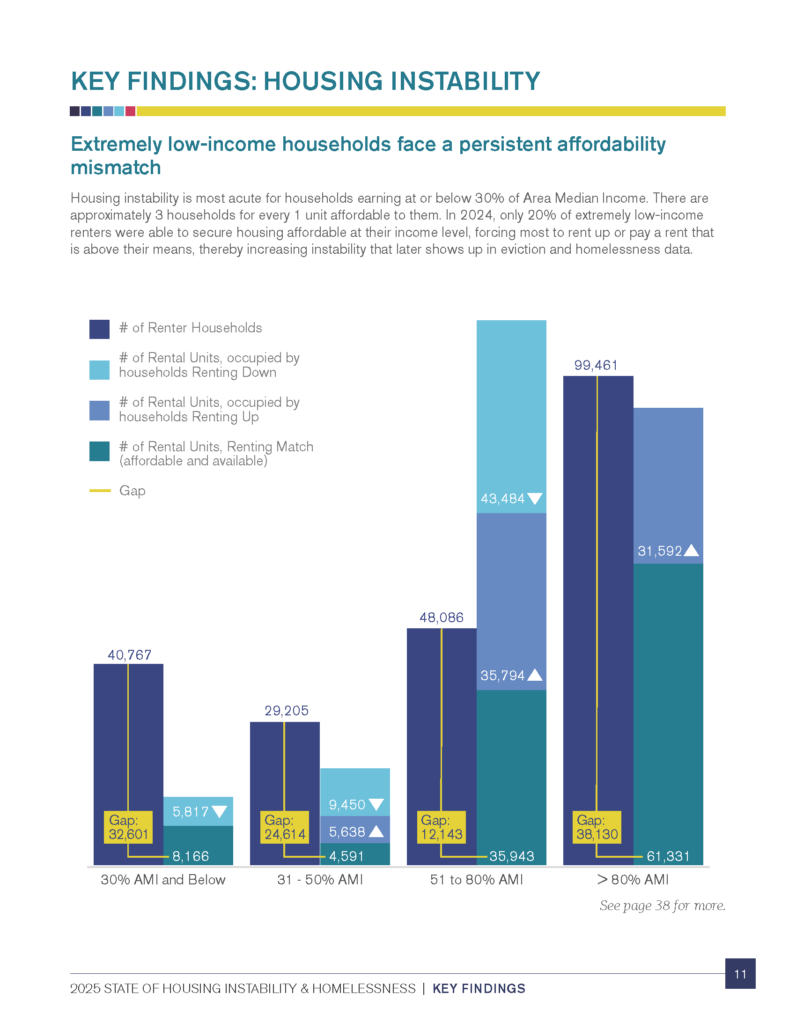
Housing cost burden is one of the clearest indicators of housing instability. In 2024, half of renter households in Mecklenburg County were cost-burdened, meaning they spent more than 30% of their income on housing. Nearly one in four were severely cost-burdened, spending more than half of their income on housing. These pressures are no longer limited to the lowest-income households. Cost burden has increased across income levels, including among moderate-income households, reflecting a widening gap between wages and housing costs.
Rent has increased dramatically over the past decade, rising 40% since 2014, while wages, particularly for low-wage workers, have not kept pace. At the same time, the supply of low-cost rental housing has sharply declined. Between 2015 and 2024, the share of rental units affordable for less than $800 per month dropped from 36% of the rental stock to just 8%. This loss of naturally occurring affordable housing has significantly reduced options for low-income households.
As a result, the affordability gap is especially severe for households with extremely low incomes. There are approximately three extremely low-income households for every one rental unit they can afford, leaving most households with no choice but to rent units beyond their means and increasing their risk of housing instability.
EVICTIONS ARE RISING AND INCREASING HOUSING RISK
Eviction filings increased sharply in fiscal year 2025, with more than 52,000 filings, almost two-thirds of which resulted in eviction orders being granted in whole or in part. Evictions can have lasting consequences even when displacement does not occur. An eviction filing can make it significantly more difficult to secure future housing, contributing to prolonged housing instability and increasing the risk of homelessness. These trends illustrate how economic pressures, combined with limited affordable housing, can quickly push households from stability into crisis.
HOMELESSNESS REMAINS PERSISTENT
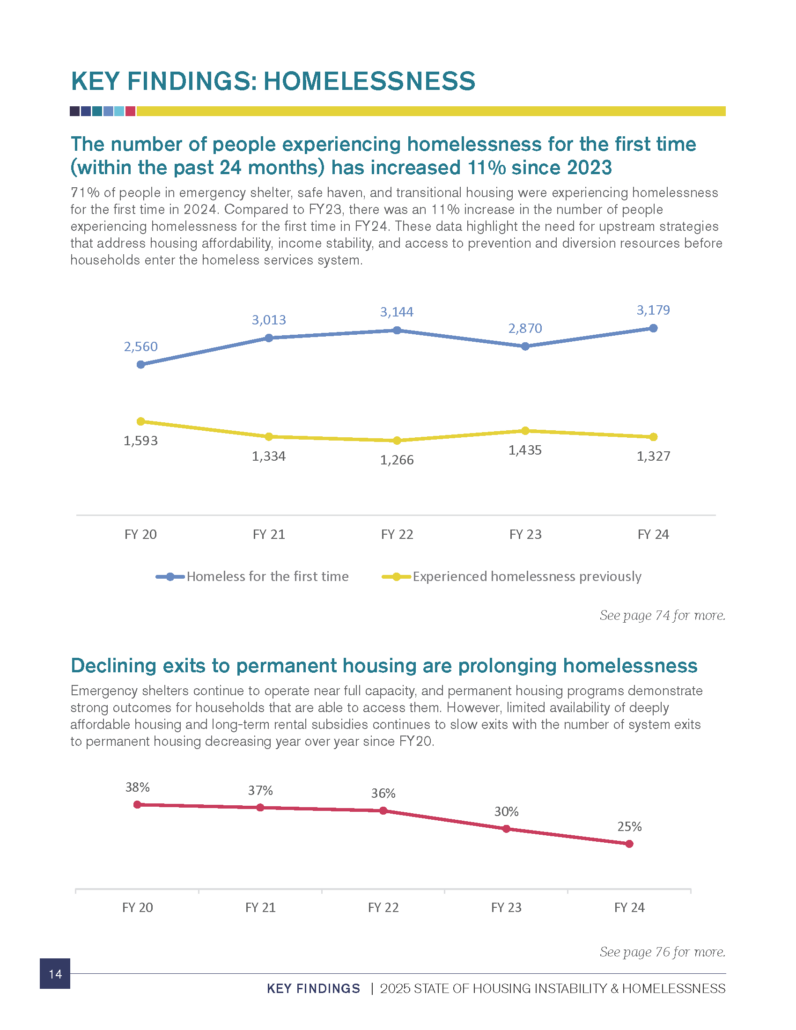
Homelessness continues to affect thousands of Mecklenburg County residents each year. The annual number of people experiencing homelessness increased by 6% between fiscal year 2023 and fiscal year 2024, with many individuals experiencing homelessness for the first time. In 2024, 71% of people in shelter or transitional housing were experiencing homelessness for the first time, highlighting the growing number of households being pushed into homelessness by economic and housing market pressures. At the same time, exits to permanent housing have declined. In fiscal year 2020, 38% of people exited the homeless services system into permanent housing. By fiscal year 2024, that share had decreased to just 25%. This decline reflects the growing shortage of affordable housing options available to help people successfully exit homelessness. Emergency shelters continue to operate near capacity, and while housing programs demonstrate strong outcomes when available, limited housing supply constrains system flow. Despite continued local investment, deeply affordable housing and long-term rental subsidies remain insufficient to meet demand. Persistent affordability gaps, especially for extremely low-income households, continue to drive housing instability and homelessness.
LONG-TERM AFFORDABLE HOUSING REMAINS THE MOST CRITICAL NEED
Long-term, deeply affordable housing is essential for achieving lasting reductions in homelessness. Permanent Supportive Housing (PSH) provides critical housing stability for individuals and families with the lowest incomes and highest support needs. However, the supply of these units and subsidies remains limited. In 2025, Charlotte-Mecklenburg had approximately 1,216 permanent supportive housing units, with demand far exceeding availability.
Housing Choice Voucher wait times reflect this shortage. The average wait time exceeds nine years, demonstrating the scale of unmet need for long-term housing assistance.
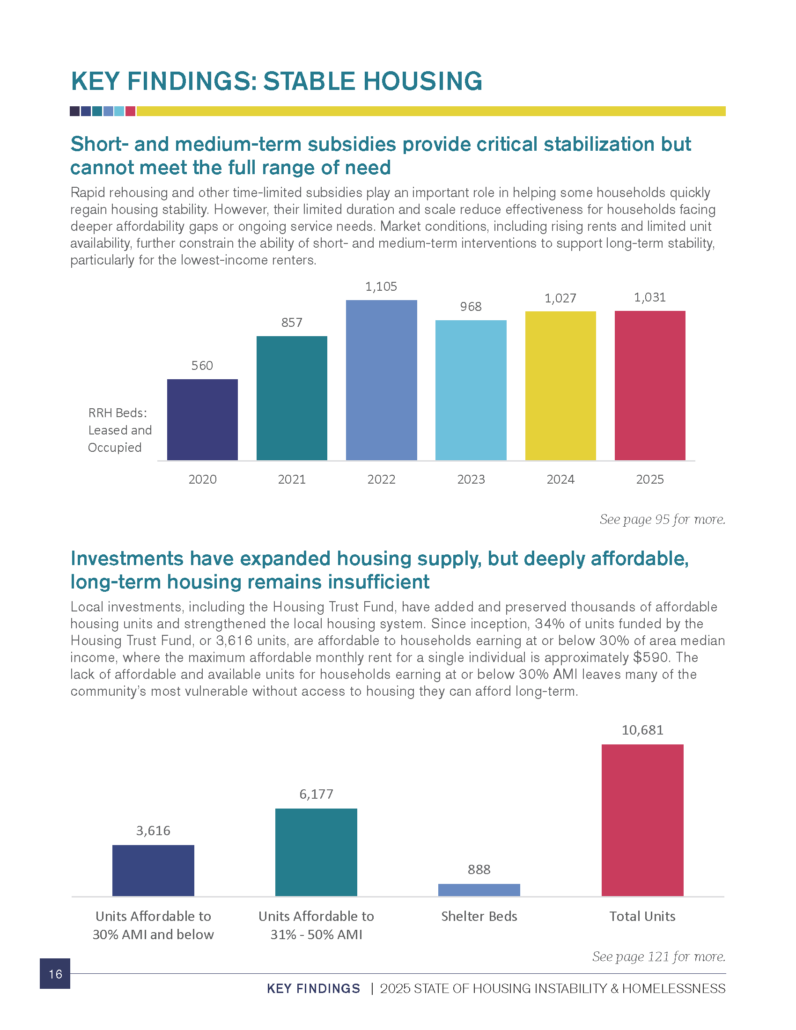
While short- and medium-term rental assistance programs, such as rapid rehousing, play an important role in stabilizing households, they cannot fully address the needs of households facing long-term affordability challenges. These programs are most effective when paired with an increased supply of deeply affordable housing. Local investments, including the Housing Trust Fund, have added thousands of affordable housing units. However, the supply of housing affordable to households earning at or below 30% of Area Median Income remains insufficient relative to demand.
STRUCTURAL FACTORS CONTINUE TO DRIVE HOUSING INSTABILITY AND HOMELESSNESS
Housing instability and homelessness are not driven by individual choices alone. The SOHIH report highlights three primary systemic drivers:
- Insufficient income and income inequality
- Lack of affordable and available housing
- Structural and systemic inequities
These factors interact to shape housing outcomes and disproportionately impact historically marginalized communities. The report also underscores the connection between housing instability and broader economic trends. Mecklenburg County’s population has grown rapidly, increasing demand for housing, while wages for many workers remain insufficient to afford market rents.
WHY DOES THIS MATTER
Findings from the 2025 SoHIH highlight the need for sustained, coordinated investment across the housing continuum. Prevention, emergency response, and permanent housing interventions must function as integrated components of a comprehensive housing stability strategy. Data-driven, equity-focused solutions remain essential to advancing the community goal that homelessness is rare, brief, and non-recurring. While local investments and system improvements have strengthened Mecklenburg County’s housing and homelessness response system, the data make clear that housing affordability remains the central challenge. Preventing housing instability, responding effectively to homelessness, and expanding access to deeply affordable housing will require sustained investment and continued strategic alignment. These efforts are essential to ensuring that all households in Mecklenburg County have access to safe, stable, and affordable housing.
The 2025 SoHIH report and all complementary material can be found on the Charlotte-Mecklenburg Housing & Homelessness Dashboard.
SIGN UP FOR BUILDING BRIDGES BLOG